
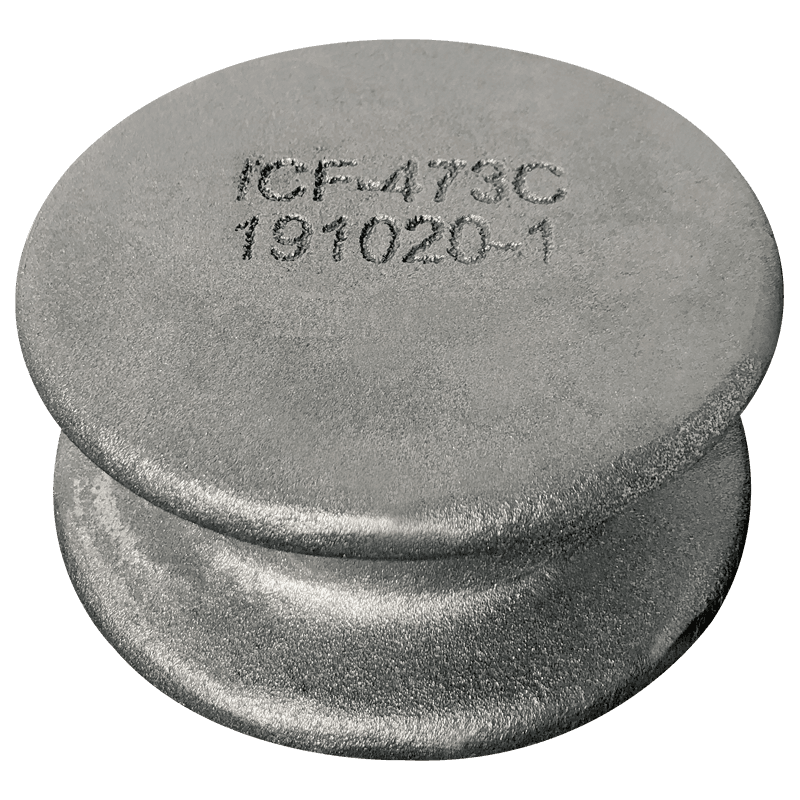
Cast Steel 10" Button Chock (Model #ICF-185)
The Model #ICF-185 is an extended, heavy duty 10" cast steel button chock engineered to provide exceptional line control and smooth directional routing for high-tonnage commercial mooring operations. Fabricated from premium marine-grade structural cast steel, this single-button chock features an oversized vertical post node that allows deck crews to rapidly wrap, pivot, or redirect massive hawser lines without having to thread long ropes from the end. Its expanded, reinforced weld-down base foundation is optimized to distribute intense localized line friction and massive vertical shear loads evenly into the vessel's primary deck stringers and internal hull framing.
Design & Function
This 10" button chock functions as a primary lines-handling fixture on large commercial workboat flats and high-tonnage cargo transport barges. By turning high-diameter mooring lines or spring lines around the 10-inch vertical cast steel column, crew members can safely redirect or check lines to optimize routing paths between heavy deck winches and dock bollards. The rugged cast steel metallurgy ensures that intense hawser abrasion will not score, gouge, or structurally weaken the core over long ocean-going lifecycles, maintaining dependable docking security under extreme tidal changes and rushing currents.
Intended Use Cases:
- High-load line-routing guides for deck configurations on high-traffic commercial weather decks.
- Localized line turning points for working rigging and heavy auxiliary winch lines.
- Mooring line management on industrial ocean-going liquid transport and aggregate cargo barges.
- Main deck refits on existing hulls requiring rugged, commercial-grade heavy button chocks.
Primary Industries & Vessel Types:
- Inland river pushers, commercial harbor tugs, and articulated tug-barge (ATB) units.
- Ocean-going ocean tugs and offshore supply vessels (OSVs).
- Commercial ocean-going cargo ships, hopper barges, and heavy deck barges.
- Marine infrastructure machinery, dredges, floating cranes, and spud barges.
Key Features
- Heavy-Duty Cast Steel Core: Offers superior structural yield strength and high ductility under sudden line shock loads, eliminating the cracking and fracturing risks associated with lower-grade cast irons.
- Large 10" Turning Diameter: Oversized button column radius reduces acute bending stresses on high-diameter synthetic ropes, protecting them from internal fiber fatigue and localized melting.
- Reinforced Weld-Down Base Flange: Broad structural base allows for massive line-tension load dissipation directly into underlying hull carling lines, transverse bulkheads, or frame gusset plates.
Installation
- Deck Prep & Alignment: Position the #ICF-185 button chock on the deck plate exactly above the underlying structural framing or gusset plates specified by the naval architect, ensuring the footprint area is ground down to clean white metal.
- Under-Deck Reinforcement Check: Verify that the deck thickness beneath the cast steel base satisfies the required structural class rules, adding insert doubler plates or carling angles to the under-deck framing if necessary to prevent deck flexing.
- Welding Execution & Pre-Heat: Pre-heat the cast steel base and steel deck plate to recommended shipyard temperatures matching the specific steel grade metallurgy, then execute a continuous multi-pass structural fillet weld around the entire flange perimeter using low-hydrogen electrodes (AWS D1.1 standard).
- Post-Weld Cooling & Inspection: Allow the completed weldment to cool slowly and naturally under an insulating blanket to prevent thermal stress fractures, then perform visual or magnetic particle NDT inspection to verify full weld integrity.
- Corrosion Protection Sealing: Thoroughly wire-brush any residual weld slag away, and immediately apply a high-solids marine primer or epoxy topcoat over the raw weld seams to seal out moisture and guard against atmospheric rust.